Understanding Treatment
Cognitive Behavioral Therapy:
A present focused, talk therapy that helps to manage emotional and behavioral disorders by reframing negative thoughts and implementing positive behavior changes.
While it does not target disorders like ADHD and ASD directly, it helps manage the symptoms, such as impulse control, executive dysfunction, and organization. It also can aid in the common comorbid mental health issues such as anxiety and depression.
How to access it:
Talk to your child's pediatrician for a referral to a licensed mental health professional.
Contact your insurance provider to find in-network psychologists or therapists who specialize in children and adolescents.
Ask your child's school counselor or psychologist for local recommendations.
Search reputable therapist directories such as Psychology Today
Many therapists offer telehealth, making CBT accessible from home.
What to expect:
Weekly 30–60 minute sessions that teach children practical coping, emotional regulation, and problem-solving skills. Parents are often involved to reinforce strategies at home.
ABA
How to access it:
Obtain a diagnosis from a qualified healthcare provider, as many insurance plans require one before covering ABA.
Ask your pediatrician for a referral to an ABA provider.
Contact your insurance provider to verify coverage and locate in-network providers.
Find a Board Certified Behavior Analyst (BCBA) who can evaluate your child and develop an individualized treatment plan.
Early intervention programs or school districts may also provide ABA-based services for eligible children.
What to expect:
After an initial assessment, a BCBA creates an individualized treatment plan. Sessions may take place at home, in a clinic, at school, or in the community, teaching skills that are useful in everyday life.
Positive reinforcement
Positive reinforcement is one of the main strategies used in ABA.
When a behavior is followed by something that is valued (a reward), a person is more likely to repeat that behavior. Over time, this encourages positive behavior change.
Antecedent, behavior, consequence:
An antecedent: this is what occurs right before the target behavior. It can be verbal, such as a command or request. It can also be physical, such a toy or object, or a light, sound, or something else in the environment. An antecedent may come from the environment, from another person, or be internal (such as a thought or feeling).
A resulting behavior: this is the person’s response or lack of response to the antecedent. It can be an action, a verbal response, or something else.
A consequence: this is what comes directly after the behavior. It can include positive reinforcement of the desired behavior, or no reaction for incorrect/inappropriate responses.
Applied behavioral analysis:
A qualified and trained behavior analyst uses scientific principles of learning and behavior to increase helpful skills (communication, social skills, self-control, and self-monitoring) and decrease harmful actions for children on the Autism spectrum.
CBT
Positive Parenting Behavior Support Strategies:
“Many parents see behavior as the measure of who our kids are, rather than using behavior as a clue to what our kids might need.”
― Becky Kennedy, Good Inside: A Guide to Becoming the Parent You Want to Be
Reinforce Positive Behaviors
Focus on recognizing and rewarding the behaviors you want to see more often. Positive reinforcement helps children learn that appropriate communication and behavior lead to positive outcomes.
Teach Self-Regulation
Help your child build independence by learning to recognize their emotions, monitor their behavior, and use coping strategies. Celebrating their progress encourages confidence and self-control.
Routines are Key
Help create routines around mealtimes and bedtime. Routines help children feel safe and secure, and promote good behaviors. Children feel good when they know what to expect.
Focus on Strengths
Recognize your child's successes—big and small. Frequent praise for effort, kindness, flexibility, and accomplishments builds confidence and motivation. Aim to provide far more positive feedback than corrections.
Set Clear Expectations
Children thrive when expectations are predictable. Use simple language, visual supports, demonstrations, or a "Tell, Show, Do" approach to teach new routines and skills.
Avoid Naming Unwanted Behavior:
Avoid naming and framing the behavior you don’t want to see. Instead of “Don’t hit the baby,” try “I love when you use gentle hands.”
Balance Easy and Difficult Tasks
Alternate challenging activities with tasks your child enjoys or feels confident doing. This helps maintain motivation and reduces frustration.
Create Reward Systems
Use simple, consistent reward systems to encourage positive behaviors. Immediate praise, preferred activities, stickers, or small rewards can help reinforce new skills and positive choices.
Ignore Attention-Getting Behavior
Any behavior that gets a child our attention will increase, whether that attention is positive or negative. If you stop responding, your child learns over time that this behavior doesn’t “work” to get a reaction.
Redirect Your Attention:
Don’t react to the child who hit; instead, go to pick up and comfort the other child. Tell them, “I’m so sorry that you are hurt. Let me give you a kiss.” This moment is an opportunity to teach empathy and kindness.
Choose Your Priorities
Not every behavior needs immediate attention. Focus on the skills and behaviors that have the greatest impact on your child's well-being and family life. Celebrate progress, remain consistent, and remember that meaningful change takes time.
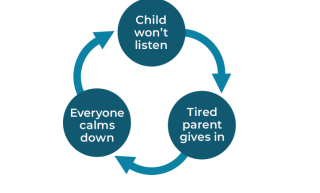
When kids act out, parents may give in to avoid a meltdown. But, if kids learn that misbehavior sometimes gets them what they want, they do it much more.